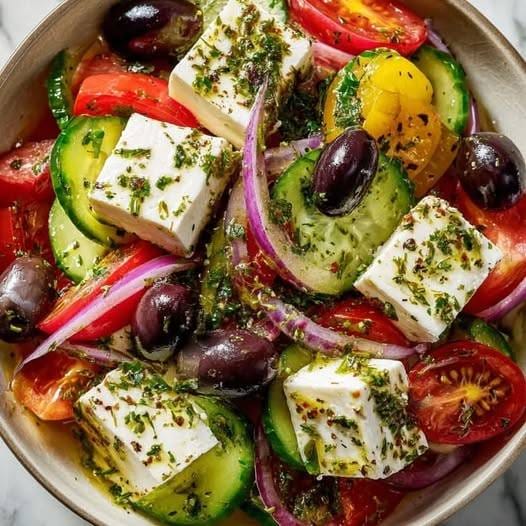
Description
The Traditional Greek Salad (Horiatiki Salata) is a refreshing, rustic dish straight from the villages of Greece. Known for its bright flavors and simplicity, it highlights crisp vegetables, briny olives, creamy feta cheese, and a drizzle of olive oil. It’s naturally low-carb, gluten-free, and full of Mediterranean goodness, making it perfect as a side dish or a light main meal.
📝 Ingredients
-
3 large ripe tomatoes, cut into wedges
-
1 large cucumber, sliced into half-moons
-
1 small red onion, thinly sliced
-
1 green bell pepper, sliced into rings
-
½ cup Kalamata olives (with pits for authenticity)
-
200 g (7 oz) block of feta cheese (not crumbled, traditional style)
-
2 tbsp extra virgin olive oil
-
1 tbsp red wine vinegar (optional, traditional version often skips it)
-
1 tsp dried oregano
-
Salt, to taste
👩🍳 Instructions
-
Place the tomato wedges, cucumber, onion, and bell pepper into a large shallow bowl.
-
Add the olives on top.
-
Place the block of feta cheese directly over the vegetables.
-
Drizzle with olive oil and (if desired) vinegar.
-
Sprinkle generously with dried oregano and a little salt.
-
Toss gently at the table just before serving, or serve as-is with the feta block on top.
🍴 Servings
-
Serves: 4 people as a side dish
-
Serves: 2 people as a light main dish
📊 Nutritional Info (per serving, 1 of 4)
-
Calories: ~220
-
Protein: 7 g
-
Fat: 18 g
-
Carbohydrates: 8 g
-
Fiber: 2 g
-
Sodium: ~480 mg
💡 Notes
-
Authentic Greek salad does not include lettuce—it’s all about ripe tomatoes and crisp veggies.
-
Always use a block of feta (preferably sheep’s milk) for the traditional look and flavor.
-
Greek oregano has a stronger, earthy flavor than regular oregano—use if available.
-
Best served fresh; avoid making it too far in advance as tomatoes can become watery.
🌟 Tips
-
Chill the vegetables beforehand for extra crunch.
-
Add capers for a more island-style variation.
-
Serve with crusty bread to soak up the flavorful juices (called “ladolemono”).
-
Use high-quality olive oil—it’s the backbone of the dish.
✅ Health Benefits
-
Rich in antioxidants from tomatoes, cucumbers, and olive oil.
-
Heart-healthy fats from extra virgin olive oil.
-
High in calcium & protein from feta cheese.
-
Supports weight management due to low-carb, high-nutrient profile.
-
Anti-inflammatory thanks to Mediterranean ingredients like olives and oregano.
❓ Q/A
Q: Can I make Greek salad ahead of time?
A: Yes, you can chop the veggies in advance, but add salt, feta, and olive oil just before serving to avoid sogginess.
Q: Can I use black olives instead of Kalamata?
A: Kalamata olives are traditional, but you can substitute with other olives if necessary—flavor will differ slightly.
Q: Is this salad suitable for vegans?
A: Traditionally no, because of feta. However, you can use vegan feta alternatives or omit cheese.
Q: Can I add lettuce to Greek salad?
A: In Greece, lettuce is not used in a true “Horiatiki” salad, but in Western adaptations, it’s sometimes added.
Q: What can I serve it with?
A: Perfect with grilled meats, seafood, or as part of a mezze platter with pita and dips.